WorkArchitecture
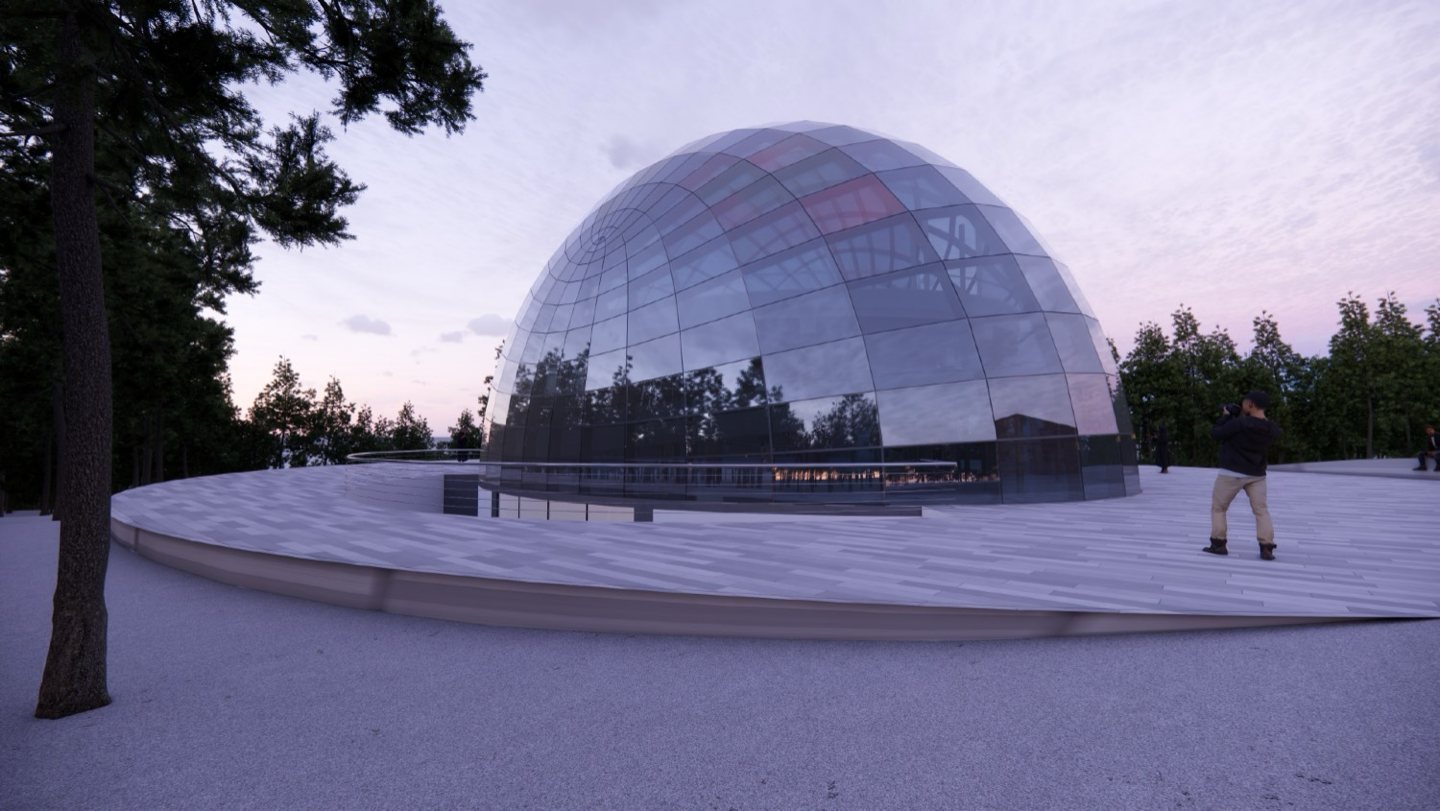
Bagh-e-Oloum dome
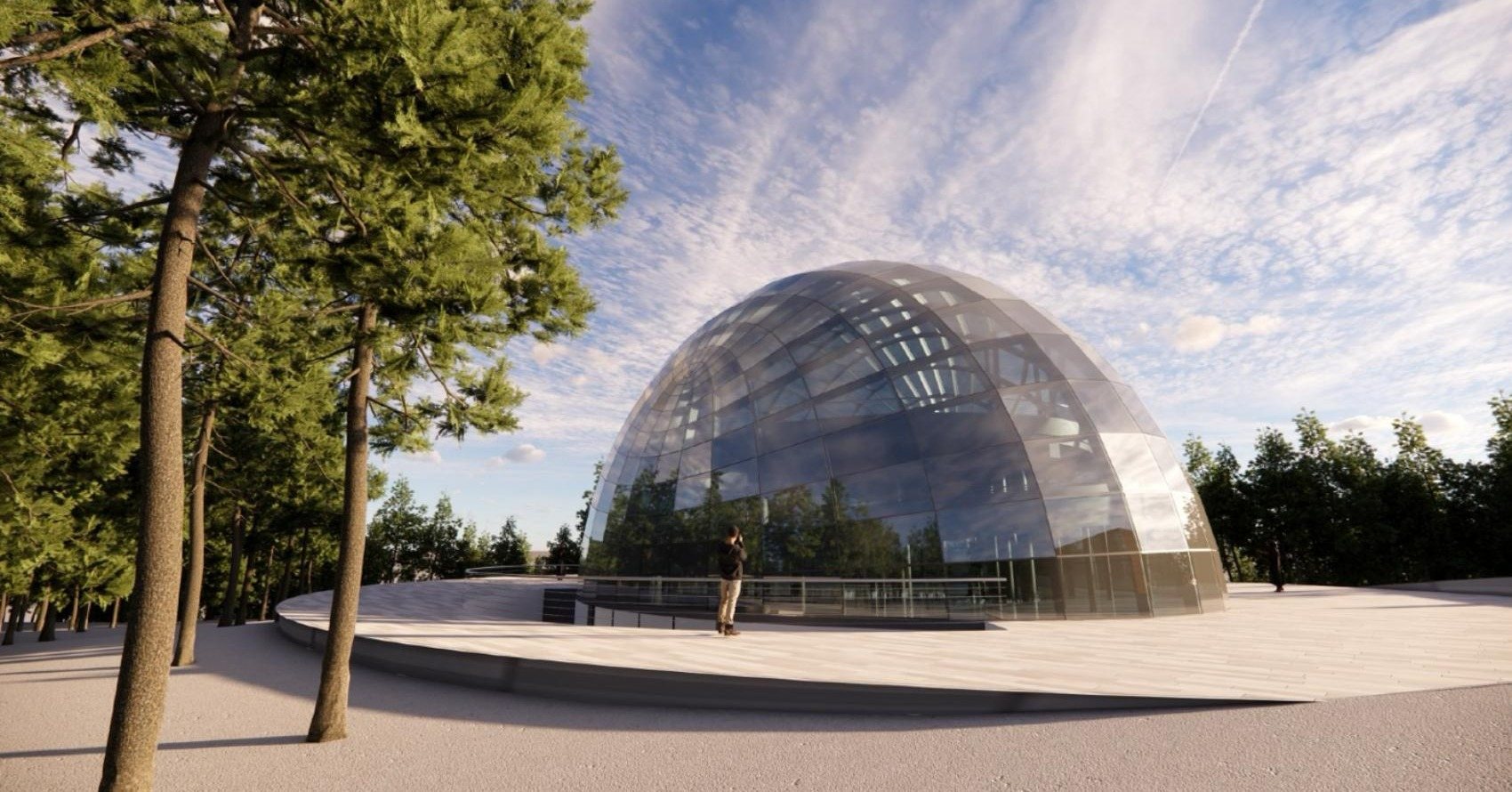
A hybrid dome for the Science Garden in Tehran, where research on fabrication-aware geometry becomes the structural system of a building.
Context
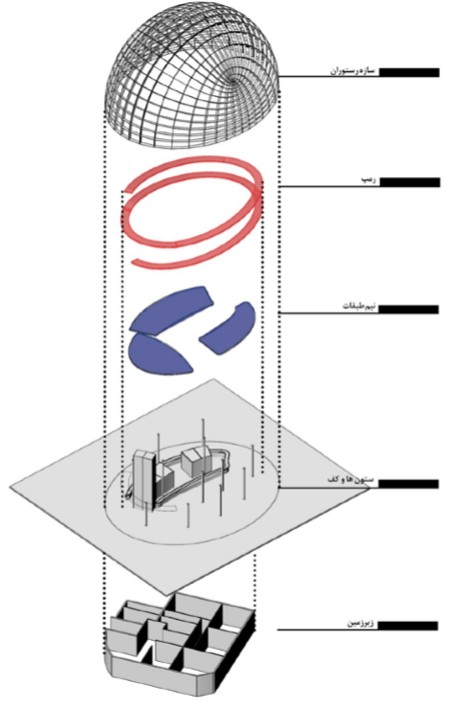
Bagh-e-Oloum is the Science Garden project of the University of Tehran. Its dome needed both an architectural idea and a way to be built. The work covers its architectural and computational design: concept, parametric modelling and fabrication strategy, across phases 1 and 2.
Geometry
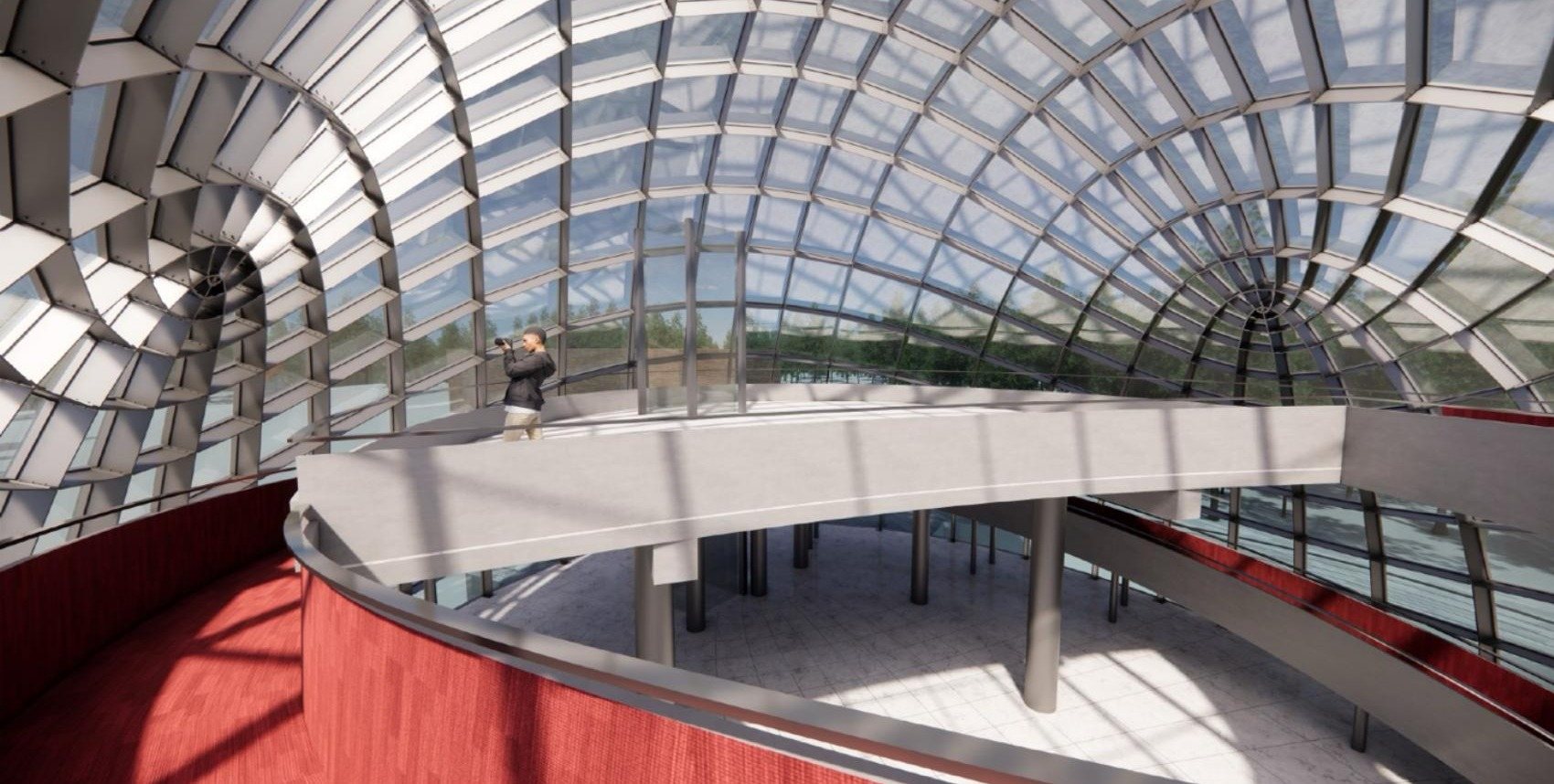
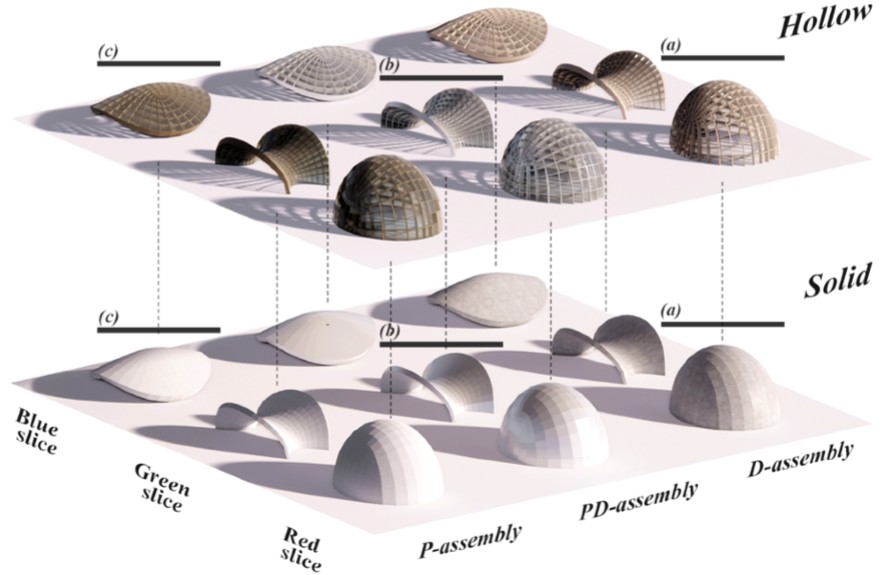
The design moves from a mathematical definition to an architectural interpretation. The dome is derived from a triply orthogonal system of surfaces: three families of surfaces that cross at right angles along their lines of curvature. Because of that property the structure can be divided into components with planar and developable faces, suited to modular fabrication.
Fabrication
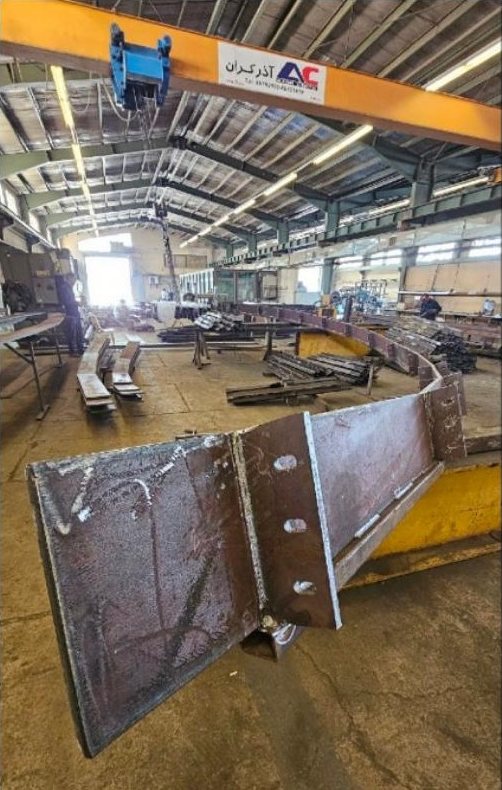
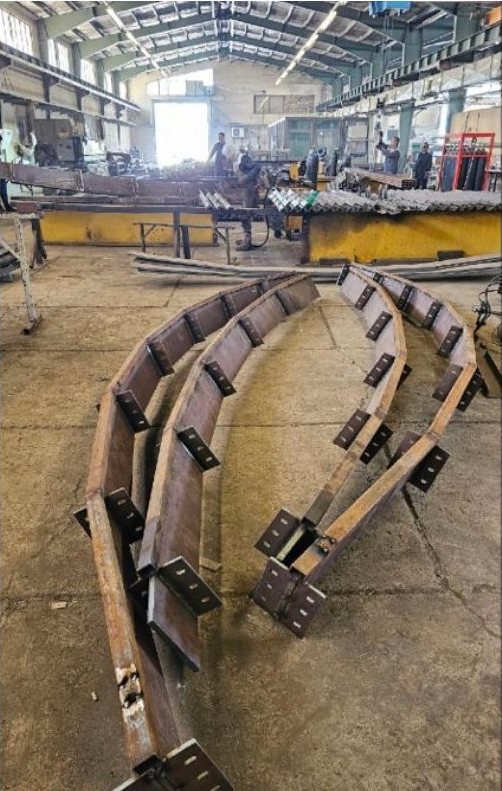
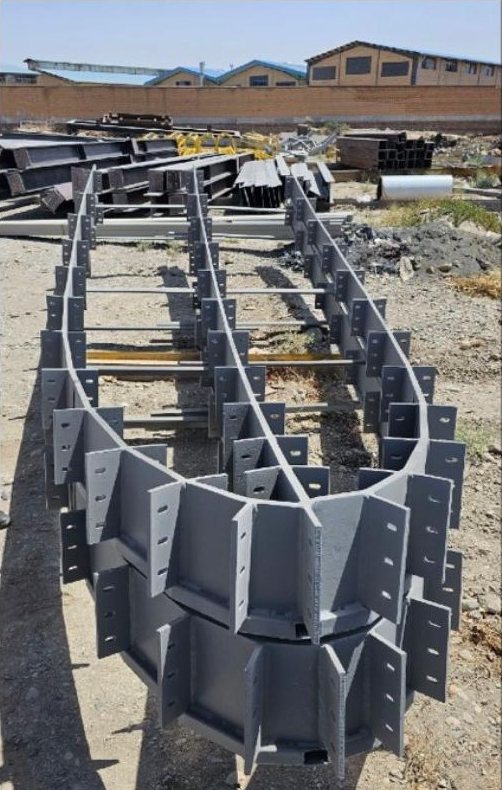
The structure is a modular steel construction manufactured by CNC, developed with Aran Sage Co., the builders of the Milad Tower in Tehran.
Relevance
This is where the office’s geometric research meets a building. The system studied in a published design model and tested in a student pavilion is applied here to a permanent building.
Publication
- 2023
Abdelmagid, A., Elshafei, A., Mansouri, M., Hussein, A. “A Design Model for a (Grid)shell Based on a Triply Orthogonal System of Surfaces.” In: Gengnagel, C. et al. (eds), Towards Radical Regeneration, Design Modelling Symposium Berlin 2022. Springer, Cham, pp. 46–60. doi.org/10.1007/978-3-031-13249-0_5